
1. Definition of Epoxy Molding Compound (EMC)
Epoxy Molding Compound (EMC) is a thermosetting chemical material specifically designed for semiconductor packaging. It refers to a general category of polymers containing more than two epoxy groups in their molecular structure, which are core to its excellent bonding and curing properties. The main components of EMC include epoxy resin, curing agent, silica (SiO₂) filler, and various functional additives (such as flame retardants, coupling agents, and release agents), where each component plays a vital role in optimizing the material's overall performance.
Epoxy resin, the base component of EMC, was initially synthesized by the condensation of epichlorohydrin and bisphenol A. Currently, it is mainly produced by modifying low-molecular-weight diglycidyl ether of bisphenol A, resulting in a variety of thermosetting structures and curing agent combinations. This structural flexibility allows EMC to exhibit a wide range of physical properties, spanning from high rigidity to good flexibility, making it adaptable to diverse packaging requirements.
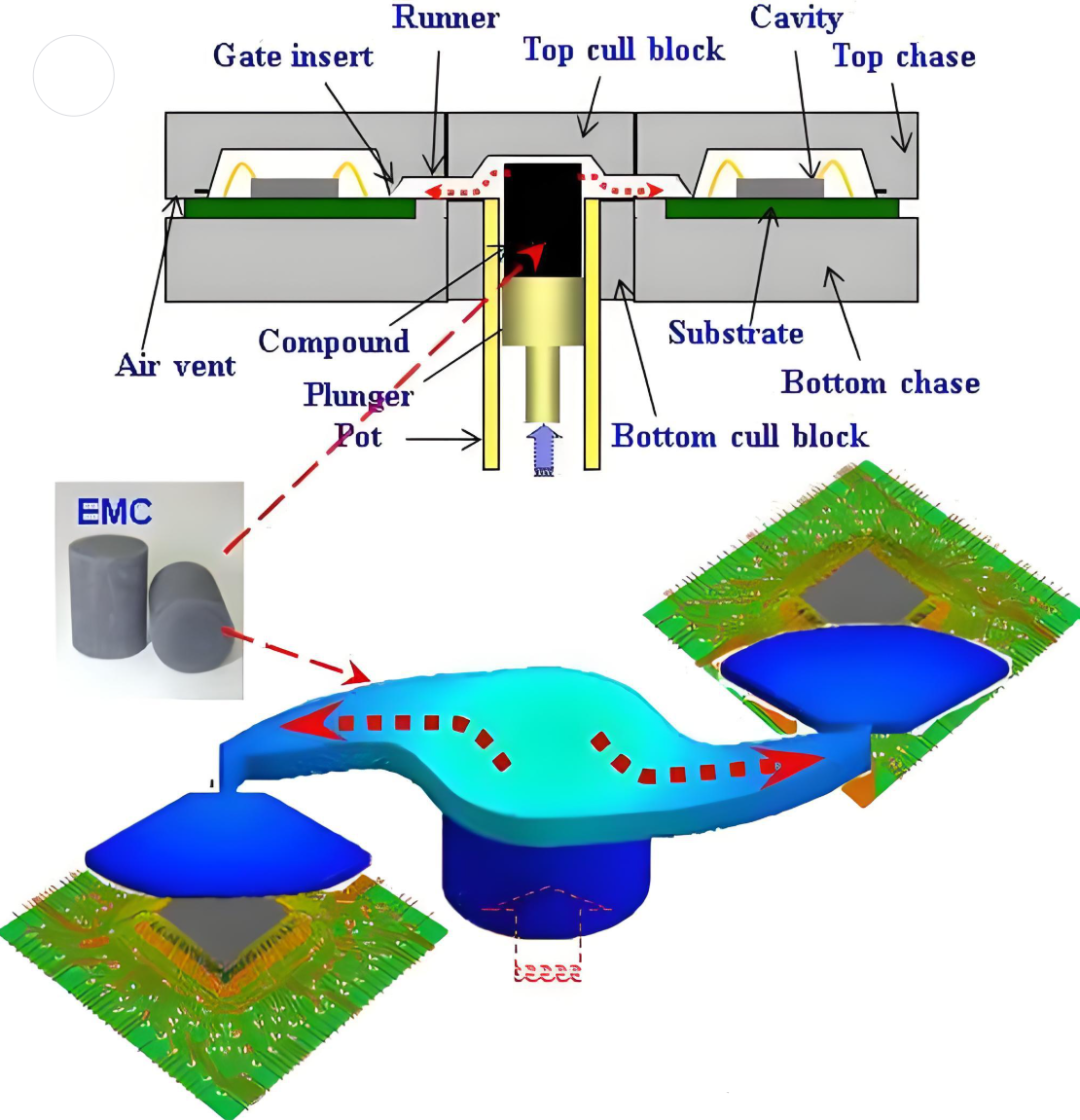
EMC can be classified into different types based on its shape and packaging application scenarios:
1.1 Classification by Shape
-
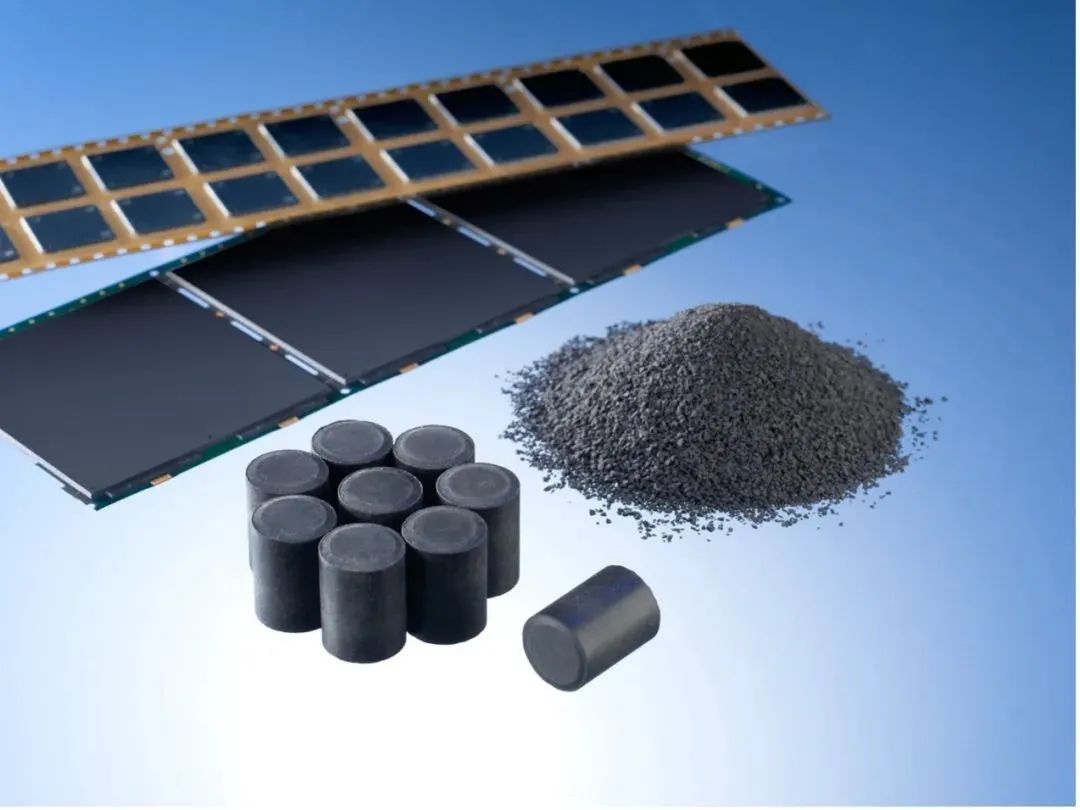
Pellet-shaped EMC: Widely used in traditional semiconductor packaging processes, it encapsulates chips through transfer molding technology. This form is characterized by stable fluidity and mature processing technology, suitable for mass production of conventional electronic components.
-
Sheet-shaped EMC: Tailored for specific packaging needs, such as thin-profile or special-structure components, where precise thickness control and uniform material distribution are critical.
-
Granular EMC (GMC): Processed into granular form, it adopts uniform powder spreading during molding. After preheating, it melts into a liquid state, and the carrier board with chips is immersed in the resin for molding. GMC boasts advantages such as simple operation, short processing time, and low cost, and is mainly applied in advanced packaging processes like System-in-Package (SiP) and Fan-Out Wafer-Level Packaging (FOWLP).
-
Liquid EMC (LMC): Also known as underfill or potting material, it is commonly used for bottom filling and encapsulation of chips. LMC features high reliability, medium-to-low temperature curing capability, low water absorption, and low warpage, making it the preferred material for High Bandwidth Memory (HBM) packaging processes, which require strict control of interface reliability and dimensional stability.
1.2 Classification by Packaging Type
Based on application scenarios, EMC is divided into two major categories: EMC for discrete components and EMC for integrated circuits (ICs).
Some EMC products can be used for both discrete component packaging and small-to-medium scale IC packaging, with no clear boundary between the two categories due to their adjustable performance parameters.
1.3 Manufacturing & Molding Processes
The manufacturing process of different EMC products is basically similar, consisting of raw material pretreatment, weighing, mixing, kneading and cross-linking reaction, calendering, cooling, crushing, and preforming (not required for some products). The key difference lies in that EMC for compression molding does not require preforming into pellets but needs strict control of crushing particle size, allowing users to directly use granular materials for packaging.
Transfer molding is the most common method for encapsulating electronic components with EMC. In this process, EMC is extruded into a mold cavity, embedding the semiconductor chip, and then cross-linked and cured to form a semiconductor device with a specific structural shape. The curing mechanism involves a cross-linking reaction between epoxy resin and curing agent under heating and catalyst conditions, forming a stable three-dimensional network structure.
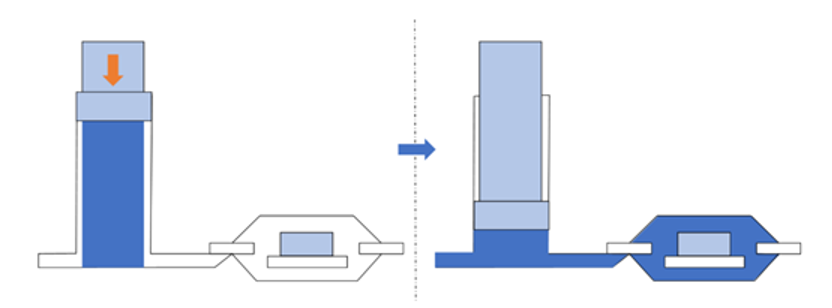
Brief Process Flowchart of Epoxy Molding Compound Molding Process
2. Core Advantages of EMC
As the dominant packaging material accounting for over 90% of global electronic component packaging applications, EMC stands out due to its comprehensive and superior performance, which can be detailed through its key technical parameters and practical application effects:
2.1 Excellent Mechanical & Protective Performance
EMC exhibits high flexural strength (typically high at 25°C) and appropriate flexural modulus, enabling it to effectively protect chips from mechanical impacts, external bending, and structural deformation during transportation, installation, and operation. The high rigidity of EMC (flexural modulus >15 GPa@25°C for high-performance products) can resist warpage caused by thermal expansion of the substrate, reducing "smile/frown" effects and avoiding solder ball bridging or cold soldering. Meanwhile, its low mold shrinkage (preferably <0.2%) ensures dimensional stability of the packaged device, maintaining the accuracy of component assembly.
2.2 Superior Thermal Stability
EMC's thermal stability is reflected in its high glass transition temperature (Tg), reasonable coefficient of thermal expansion (CTE), and good heat resistance. High Tg materials (Tg >150°C) can maintain structural integrity and mechanical properties in high-temperature environments (such as automotive electronics), avoiding softening, delamination, or chip cracking caused by temperature fluctuations. The matching of CTE (α1 and α2 values) with other packaging materials (chips, substrates, solders, etc.) minimizes thermal stress generated by inconsistent expansion/contraction during temperature changes, thereby reducing risks of delamination, solder joint cracking, and warpage.
2.3 Reliable Electrical Performance
EMC has excellent electrical insulation properties, which can effectively isolate the chip and internal circuits from the external environment, preventing electrical leakage, short circuits, and electromagnetic interference. This reliability is crucial for ensuring the stable operation of electronic components in complex electrical systems, such as power supplies, inductors, and connectors.
2.4 Versatile Process Adaptability
With adjustable spiral flow length (≥100cm for high-fluidity products) and gel time (20-60 seconds), EMC can adapt to different packaging processes and component structures. High-fluidity EMC is suitable for thin-profile packaging, Fan-Out WLP, and multi-chip stacking with complex structures, reducing voids and ensuring complete filling. The flexible gel time allows for a balance between production efficiency (short gel time for high-speed production) and packaging quality (long gel time for thick-profile packaging to avoid incomplete internal curing).
2.5 Cost-Effective & Scalable Production
EMC's raw material sources are abundant, and its manufacturing process is mature and scalable. Granular EMC (GMC) and compression molding EMC further reduce production costs through simplified operation and shortened processing time. The addition of silica fillers not only optimizes performance (reducing CTE and shrinkage) but also controls material costs, making EMC a cost-effective choice for mass production of electronic components.
3. Application Scenarios of EMC
Benefiting from its comprehensive performance advantages, EMC is widely used in various fields of electronic component packaging, covering traditional discrete components, integrated circuits, and advanced packaging technologies. Its main application scenarios include:
3.1 Discrete Components
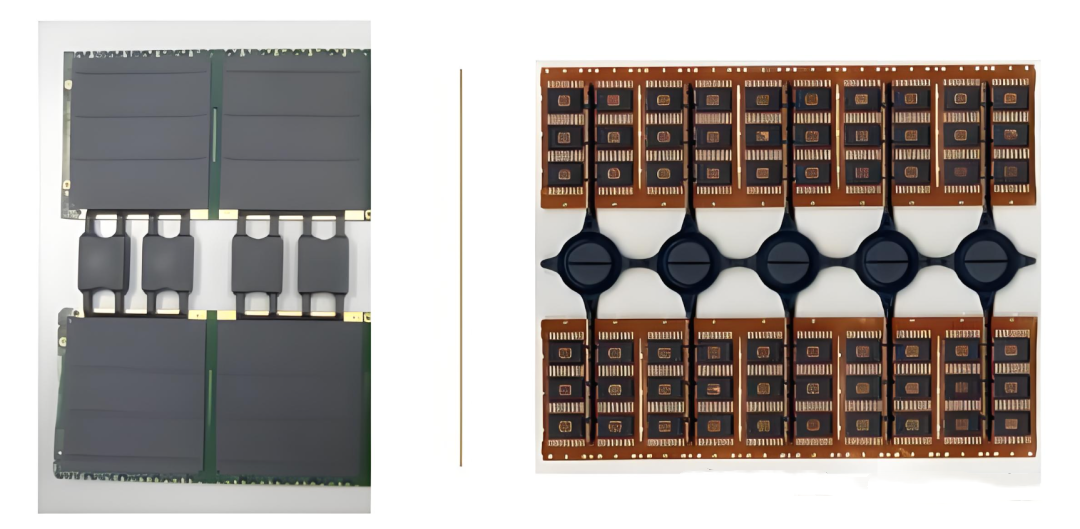
EMC is extensively used for packaging discrete components such as diodes, transistors, thyristors, and capacitors. These components require reliable protection against environmental factors (moisture, dust, temperature) and mechanical impacts. Pellet-shaped and sheet-shaped EMC are the main choices here, thanks to their mature molding technology and stable performance, ensuring the long-term reliability of discrete components in consumer electronics, industrial control, and power supply systems.
3.2 Integrated Circuits (ICs)
For small-to-medium scale and large-scale integrated circuits (such as microcontrollers, memory chips, and power management ICs), EMC provides critical packaging protection. It encapsulates the chip to prevent damage from external factors and ensures electrical insulation and heat dissipation. IC packaging requires strict control of EMC's CTE, Tg, and flow properties to match the complex structure of the chip and substrate, and EMC products for IC packaging can be customized according to specific chip specifications and application requirements.
3.3 Advanced Packaging Technologies
With the development of semiconductor technology, advanced packaging technologies such as SiP, FOWLP, and HBM have become mainstream, and EMC plays an irreplaceable role in these fields:
-
System-in-Package (SiP): Granular EMC (GMC) is widely used in SiP packaging due to its simple operation, short processing time, and good compatibility with multi-component integration. It can effectively encapsulate multiple chips and passive components in a single package, reducing the size of the system and improving integration density.
-
Fan-Out Wafer-Level Packaging (FOWLP): High-fluidity EMC (spiral flow length ≥100cm) is suitable for FOWLP, which requires complete filling of complex structures and thin-profile packaging. It ensures uniform encapsulation of the chip and redistribution layer, reducing voids and improving the reliability of the packaged device.
-
High Bandwidth Memory (HBM): Liquid EMC (LMC) is the preferred material for HBM packaging, as it has high reliability, low water absorption, low warpage, and can be cured at medium-to-low temperatures. It is used for bottom filling of HBM chips, enhancing the bonding strength between the chip and substrate and ensuring the stability of high-speed data transmission.
3.4 Automotive Electronics
Automotive electronics (such as engine control units, infotainment systems, and ADAS modules) operate in harsh environments with large temperature fluctuations (-40°C to 150°C) and high vibration. High Tg (>150°C), high flexural strength, and low CTE EMC are used here to ensure that electronic components can withstand extreme temperatures and mechanical vibrations, maintaining stable performance and safety during the service life of the vehicle.
3.5 Consumer Electronics
In consumer electronics such as smartphones, laptops, and wearables, EMC is used for packaging various chips and electronic components. It needs to balance performance and cost, and meet the requirements of miniaturization and thin-profile packaging. High-fluidity and low-warpage EMC helps reduce the size and weight of devices, while ensuring reliable operation in daily use.
Key Parameters
Understanding the key parameters of EMC is crucial for selecting the right material for specific applications:
- Spiral Flow: This measures the distance the material flows when injected into a spiral mold under high temperature and pressure, reflecting its fluidity. Higher spiral flow values indicate better fluidity, suitable for thin packaging and complex structures.
- Gel Time: The time it takes for the molding compound to transition from a heated, fluid state to a cross-linked, solid state, indicating the curing rate. Short gel times are suitable for high-speed production but may lead to incomplete filling or mold blockage. Longer gel times provide more filling time but reduce production efficiency.
- Glass Transition Temperature (Tg): The temperature at which the material transitions from a rigid glassy state to a rubbery state. High Tg materials are more suitable for high-temperature environments, such as automotive electronics, but may become brittle.
- Thermal Expansion Coefficient (CTE): This measures the material's sensitivity to temperature changes. A high CTE can lead to thermal stress and interface delamination due to mismatched expansion rates among different materials in the package.
- Flexural Strength: The maximum stress a material can withstand before breaking under bending load, reflecting its resistance to bending damage. High flexural strength at room temperature protects chips from mechanical impact but decreases significantly at high temperatures.
- Flexural Modulus: The ratio of stress to strain under bending load, describing the material's stiffness. High flexural modulus materials better resist warping caused by substrate thermal expansion but may increase stress due to CTE mismatches.
- Mold Shrinkage: The volume contraction ratio of the molding compound as it cools from a molten state to room temperature. Low shrinkage rates are generally preferred to minimize dimensional changes.
- Specific Gravity: The ratio of the molding compound's density to that of water, primarily determined by filler content. High specific gravity materials, often with high filler content, reduce CTE but increase cost and potential chip stress.
Conclusion: Choose the Optimal Solution for Your Next-Generation Packaging
Epoxy Molding Compound is not merely a "protective shell" for semiconductors; it is a strategic material that determines packaging performance, reliability, and cost. Every decision, from balancing key parameters to selecting the package form, directly impacts the final product's market competitiveness.
Whether you are developing high-reliability modules for automotive electronics, pursuing ultra-thin consumer chips, or working on the cutting edge of advanced packaging technologies like SiP, FOWLP, or HBM, choosing the EMC that perfectly matches your design is crucial.
Contact our technical team today to discuss your application needs, obtain detailed product specifications (TDS, MSDS), and request free samples for testing. Let us work together to drive innovation in semiconductor packaging with high-quality EMC solutions!


